All Categories
Featured
Table of Contents
Efficiency ceases to be a one-time task or a buzzword; it becomes a core cultural value that drives everyday decisions. By incorporating these KPIs into your regular evaluations and strategic preparation, you construct sustainable momentum that not only boosts profitability however also produces a more resilient, agile, and competitive organization poised for long-term success.
Prepared to build your functional strategy on a rock-solid structure? supplies safe, reliable, and high-performance cloud hosting for your essential tax, accounting, and company applications, freeing you to concentrate on enhancing the procedures that matter many. Discover how a seamless cloud environment can improve your company's efficiency by checking out Cloudvara today.
Measuring performance at scale requires more than output counts. When productivity is not measured, ineffectiveness collect and performance declines.
Hours worked, existence, or keystrokes do not reflect real performance. Metrics must show finished work, delivered worth, and preserved quality.
Maintaining Solid Enterprise Cost Governance Standards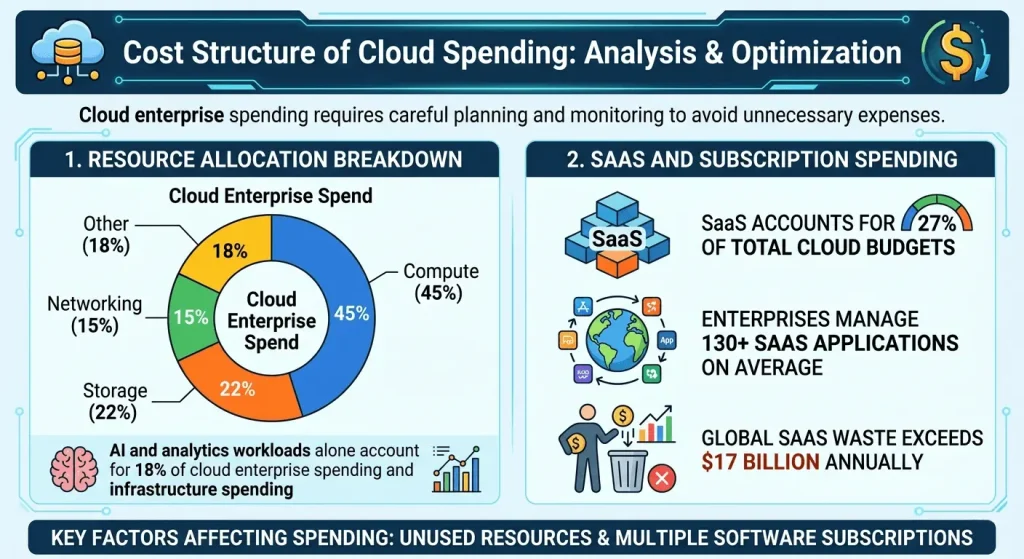
Similarly important, determining performance highlights where your organization might be lagging. Today's work environment makes traditional performance cues less relevant.
Essential ROI KPIs for Modern Enterprise
Rather, leading companies track a portfolio of metrics that, together, capture how well the service is utilizing its time and resources. The specific KPIs may vary by industry and company, however below are a few of the most common and useful efficiency metrics: This measures how much income the business produces per employee.
Tracking this over time shows whether the company is improving its ability to convert people into organization output. These metrics show how reliably and quickly teams deliver work. Task completion rate compares planned work to completed work, while cycle time measures for how long jobs take from start to finish. Together, they expose execution performance and emphasize workflow bottlenecks.
Low usage points to underuse or process friction, while consistently high usage can signify overload. This metric assists ensure work is distributed efficiently without developing burnout. Efficiency should represent quality. High mistake or problem rates minimize genuine output by increasing rework. Low mistake rates show effective execution and sustainable productivity.
Efficiency depends on labor force schedule. Monitoring absence and turnover helps organizations resolve performance losses associated with labor force instability. Pick metrics that align with your organization model and objectives.
While determining performance is essential,. Here are some mistakes to avoid: Determining hours, log-ins, or visible activity puzzles busyness with efficiency.
Implementing Robust Expenditure Frameworks
Efficiency can not be captured with one number. Single-metric measurement misshapes habits and causes important work to be neglected. A balanced set of metrics covering output, quality, and execution performance is required to reflect real efficiency. Metrics that are simple to track but unrelated to results mislead decision-making. Every efficiency metric must plainly map to a service goal and motivate the right behavior.
Efficiency metrics that reward overwork or consistent schedule lead to burnout and turnover. Metrics should be translated with context and utilized to enhance systems, not to assign blame. Sustainable productivity depends on maintaining staff member capability over time. By preventing these risks and utilizing performance metrics attentively, you can cultivate a culture of constant enhancement.
Determining business performance needs visibility into how work really happens throughout groups, tools, and time. Worklytics is created to offer that exposure by translating daily work activity into objective, organization-wide efficiency insights.
The platform measures signs such as focus time, meeting load, cooperation strength, and responsiveness. These signals assist organizations examine whether employees have sufficient continuous time to carry out core work and whether partnership is enabling or hindering efficiency. By examining these patterns with time, Worklytics allows companies to spot trends that straight affect enterprise performance, including growing conference overhead, increasing after-hours work, or decreasing execution capability.
Maximizing Asset Utilization for Optimal ROI
Worklytics makes it possible for benchmarking across groups, departments, and time periods, supplying a clear view of efficiency circulation within the company. Leaders can identify which operating designs support higher output and which present friction. Sample report of Worklytics in Work environment Analytics BenchmarksTrend analysis permits organizations to track whether performance is enhancing or degrading as business scales, reorganizes, or adopts new tools.
All efficiency data is aggregated and anonymized, with no individual-level reporting and no access to message or file material. Only metadata is evaluated to understand work patterns at scale. Privacy style of WorklyticsThis design ensures that productivity measurement remains focused on systems and workflows rather than individual security.
Its control panels are created to support decision-making by connecting productivity patterns to organizational outcomes. Leaders can assess the impact of operational modifications such as conference policy adjustments, tooling consolidation, or workload rebalancing, and observe how performance reacts.
Enhancing Cloud Asset Performance and Governance
Rather of depending on instinct or anecdotal feedback, organizations can use Worklytics information to make targeted, evidence-based changes that improve business efficiency over time. Worklytics enables organizations to measure business efficiency where it in fact lives: in how work flows across groups, tools, and time. By concentrating on execution capability, partnership efficiency, and focus conservation, the platform supplies a useful structure for enhancing performance at scale.
Enterprise productivity determines how successfully an organization transforms labor and resources into company output. Organizations that actively measure performance consistently outshine those that do not.
No single metric suffices. Together, these indications reveal whether work is effective, reliable, and sustainable. Knowledge work must be determined through outcome-based indications rather than activity. Relevant metrics consist of finished deliverables, development against goals, quality of output, and organization effect. Proxy metrics are appropriate when they plainly associate with outcomes.

Latest Posts
Is the Enterprise Budget Ready for 2026?
Streamlining Resource Distribution Across IT Infrastructures
Essential KPI for IT Resource Optimization